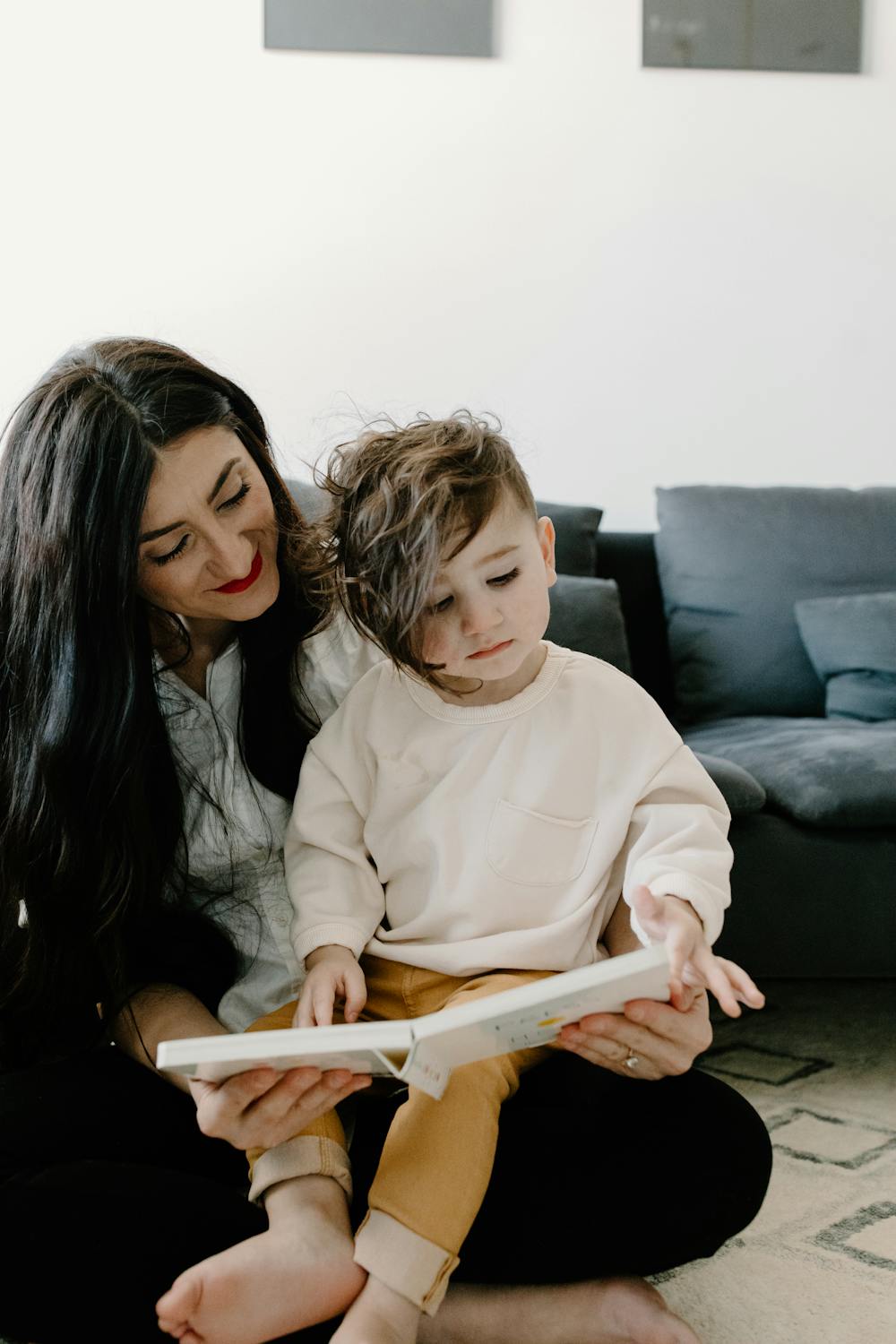
If you have a toddler you might not exactly be thinking about teaching them to read in any major way. Not when they’re spending most of their days drawing on the wells with crayons and drooling on jigsaws. But you know what? The sooner you start exploring the written word with them the more they’ll love it, and the easier it will be when they get to school.
Sound like a challenge you can get behind? Here are some tips to help your toddler with reading right now:
1. The Art of the Snuggly Reading Nook
First things first, let’s talk comfort. Picture this: you sink into a cushy armchair, toddler perched on your lap, with a book that doesn’t have half the pages chewed off. Sounds like a dream, doesn’t it? To make reading time appealing, create a little nook—blankets, pillows, maybe a soft toy or two. If your toddler’s easily distracted by the TV, hide the remote (seriously, do it). The idea is to make reading feel like a special moment. Some parents even call it “Mummy’s quiet time,” but let’s not kid ourselves—your toddler will still try to climb you like a tree if the story doesn’t catch their fancy.
2. It’s All About the Voices
Now, unless you’re RADA-trained, you might feel a tad ridiculous doing dramatic voices. Here’s the thing: your toddler doesn’t care if you sound more Mickey Mouse than Meryl Streep. They just love the spectacle. Whip out that squeaky mouse voice, that booming giant’s roar. Throw in a posh accent for the princess or a gruff pirate snarl for the villain. Go overboard—seriously, toddlers live for the drama. Bonus points if you can rope an unsuspecting older sibling or partner into cameo roles. The more chaotic, the better (just keep the neighbours from calling the police if your giant’s roar sounds suspiciously like a real threat).
3. Syllables: Breaking Down the Beats
You’ve probably heard about phonics and how crucial it is for budding readers. But let’s throw in a smaller piece of that puzzle: syllables for kids. Teaching your toddler to clap along with syllables (“ap-ple,” “puz-zle,” “di-no-saur”) helps them hear the rhythm and structure of words. It’s like a little dance party for their ears—minus the toddler DJ meltdown when you don’t play Baby Shark. You can make a game of it: pick random household items and do a syllable breakdown. “Re-frig-er-a-tor” is a real showstopper. This small, fun activity helps them tune in to how words are formed. Before you know it, they’ll be clapping out syllables to everything—including “choc-o-late,” which they’ll demand shortly after.
4. Reading Books, Eating Books—Same Thing, Right?
Ah yes, the telltale sign of a well-loved toddler book: teeth marks on the cover. Don’t despair—this is actually normal (and a bit gross). Toddlers explore the world with their mouths as much as their eyes. If you’d rather not have your first edition of The Very Hungry Caterpillar thoroughly munched, invest in a few sturdy board books. Some parents even find cloth books helpful—though your toddler might just think it’s a new chew toy. The takeaway: don’t stress about pristine pages. If your child is gnawing on a story, at least they’re showing interest, right?
5. The Power of Predictable Routines
Now, I’m not suggesting you become a strict reading dictator. But toddlers do respond well to routine (shockingly, when they aren’t busy rewriting the laws of bedtime). Set aside a consistent time each day for reading—maybe just after bath, before the nightly wrestle… erm, I mean bedtime. Over time, they’ll start to anticipate storytime, possibly even look forward to it (once they realise no one’s going to force them to eat broccoli during this sacred reading window). Consistency helps build a lifelong habit, and it also lets your child wind down with something that isn’t beeping, flashing, or playing adverts every five seconds.
6. Let Them “Read” to You
Yes, I know, your toddler’s “reading” might sound like alien gibberish. But letting them pretend to read fosters self-confidence. Hand them a book they love (preferably one you’ve read so often you could recite it in your sleep) and let them flip through the pages, telling you what they think is happening. Even if they confuse the cat with a dinosaur or decide the princess is actually a giant carrot, applaud their creativity. This is about building narrative skills, not accuracy. One day, they’ll figure out the difference between a cat and a dinosaur… hopefully before they ask for a pet T-Rex.
7. Embrace the Chaos, Mix It Up
No toddler reading tips guide would be complete without acknowledging the chaos. Your child might decide, mid-book, that they need to do a full sprint around the house. They may insist on reading the last page first or flipping the book upside down. Embrace it. The more you cling to the idea of a perfect reading session, the more likely it is you’ll end up frustrated. Let them explore the book on their terms, even if it means discussing the pictures in complete random order. As long as they’re engaging with the material, it’s a win in my book (pun entirely intended).
Once upon a time…