Are you struggling with binge eating and looking for practical solutions to break the cycle? In this comprehensive guide, I’ll share my personal experience with binge eating and the effective strategies I’ve used to TRY and overcome it.
From time-restricted eating and mindful eating to understanding the underlying reasons for binge eating and breaking the habit loop, I’ll dive into the methods that have helped me regain control over my eating habits. If you’re seeking actionable tips and insights for a healthier lifestyle, this is the post for you.
My Advice so far to help with Binge Eating…
Like I said at the top, I am a binge eater. As of this writing, I’m not currently binge eating. I’ve managed to curb it. But that’s not to say it’ll never happen again. It 100% will. So this is not be sitting here going “Ha! I’ve solved it! Listen to me as I’m an expert!”
I’m simply here to go “this is what I’m currently doing, maybe this will help you too.”
So let’s go…
Time restricted eating
Also known as intermittent fasting, time restricted eating is just as the name suggests – you set times in which you eat, and stick to it.
For me, I skip breakfast and TRY not to eat after the kids go to bed. The main one here is the trying not to eat after the kids go to bed, as let’s be honest, that’s when the binge eating is most likely to occur.
After they go to bed they can’t steal your snacks. It’s late. You’re likely about to binge watch some television, it only makes sense that you binge eat too – psychologically it all makes sense. If you can get into the habit of not eating after a certain time, then you’ll find it easier to not binge eat.
As for skipping breakfast, I rarely ever binge eat in the mornings.
It’s almost always afternoon/evening. So for me this is more of a calorie thing. I don’t really need breakfast and can easily wait until 12/1ish before eating. This is just a personal preference for me as I’m looking to lose a little weight – I’m doing a 6 pack challenge for the lolz – and get into the habits of being healthier overall.
This kinda makes the next point easier too…
Mindful Eating
Mindful eating is basically where you’re present with your food.
From cooking it, plating it up, and of course eating it. It’s about being absorbed in it so that you actually enjoy it rather than seek the feelings that often come with binge eating.
When I binge eat I very rarely eat mindfully. I just EAT. I get that little dopamine hit from shoving sugary food in my mouth and before I’ve even finished chewing my mind is racing as it wants that next hit.
It’s a VICIOUS habit loop that can play out incredibly fast. I can go from having a healthy day with food to eating half a cake in 3 minutes.
Usually, if I can avoid that SECOND bite, then I’m fine.
You can’t really deny yourself all snacks, can you? But for me, it’s about stopping myself from going “let’s have a little bit of chocolate” because who doesn’t fancy some chocolate occasionally. And not letting it lead to the next bite, and the next, and the next.
Which brings me onto…
Calorie Counting
Calorie counting helps as you can eat whatever you want GUILT FREE as long as you remain within your calories.
Want chocolate? Have it. Just make sure you count it.
If you use something like MyFitnessPal then you can even put in evening snacks at the start of the day so you can make sure you don’t over-consume your calories BEFORE you get to the evening. You can literally plate up dinner and reduce portions based on what you’ll want to eat later.
This way you can still eat the food you like/crave, but do so in a way that’s controlled.
You’re allowing yourself the enjoyment of eating foods you perhaps binged on before, but you’re doing it in a way that’s controlled.

Understanding WHY you binge eat
Ok, so this is a big one really. If you can understand why you binge eat then you stand a chance at changing the behaviour.
For me, I think I used to binge eat when I was depressed – or stressed, or even just bored. I’d just sit there and scoff my face whilst watching some shite on TV or playing Xbox. Usually whilst Rachel was in work and I’d have literally ALL DAY by myself.
The problem is, those depressive feelings that often triggered it are gone. So too are the bored ones in fairness. I don’t have time to be bored. But habits are powerful so they still remains.
Meaning when I get a taste of sugar, sometimes that old habit loop of binge eating comes back, and without even really realising it, I’ve finished a full big bar of Diary Milk and I’m itching for the next thing. I’m not comfort eating, I’m not stressed, I’m not depressed, I’m just a victim of an old – albeit strong – habit loop.
As for anyone else reading this, your reason for binge eating might be totally different. But remember, as Psychologist Nathaniel Branden said, “The first step toward change is awareness. The second step is acceptance.”
Recognising and adjusting the Habit of Binge Eating
To me, binge eating is essentially a negative habit loop. Of course, it can be a little more complex than that, and probably has deeper psychological components to it. But if you looked at it as a habit loop, then you might be able to help break it.
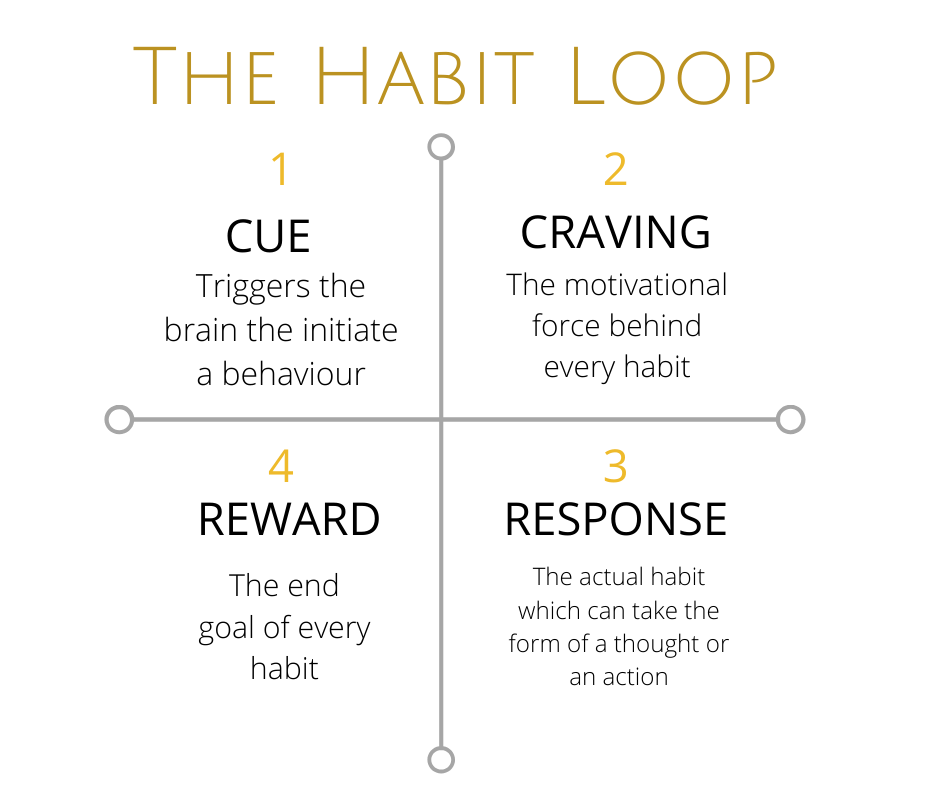
For this, I’ll use James Clear’s version of the habit loops – from Atomic Habits, which I highly recommend – that has the additional step of “craving” in the loop. This basically adds the “why” element which is helpful in better understanding the loop, and therefore breaking it.
It looks a little like this:
For binge eating it could be seen as this:
- Cue: Emotional stress or seeing a trigger food.
- Craving: Intense desire to binge eat for comfort or relief.
- Routine: Consuming large amounts of food in a short time.
- Reward: Temporary relief, pleasure, or comfort reinforcing the habit.
To break the habit loop of binge eating, you essentially have to change the routine above.
For me, I usually TRY to remove the cue. No snacks in the house means no trigger to binge eat. Even if I WANTED to binge, I literally can’t as there aren’t any snacks. And I’m sorry, but I ain’t binge eating on carrots.
Only problem there is that it’s almost impossible to remove snacks – and even harder to remove ALL binge-able food. Which is why any food related issue is always difficult due to the fact that you still need to eat. It’s much easier to avoid alcohol for argument sake, but binge eating isn’t quite exclusive to snacky/sugary food is it?
But you can reduce the cue in some way. You can “hide” triggering foods deep in the cupboard. You can avoid buying them unless you really fancy them. And you can always stock up on foods that don’t trigger a binge eating response from you. For me, I never binge eat apples. But if I’m peckish I might grab one if they’re visible on the kitchen side instead of reaching into the cupboard.
Changing the routine to the reward
If your body is is seeking pleasure, comfort or some sort of relief, then there are other alternatives that could replicate that feeling.
Instead of binge eating you could do something else. Exercise isn’t a bad shout. Not only does it release the “feel good” chemicals your brain wants, but you’ll also feel more positive for doing something “healthy” instead of unhealthy.
Don’t get me wrong, if someone said “bag of skittles or 50 press-ups” – I’d probably want the skittles. But if I was somehow able to pick the press-ups – avoiding temptation is much easier than resisting – then I’d likely still feel somewhat good from the exercise.
Failing that, you could find comfort or relaxation from a hobby. Painting, drawing, sewing. Whatever your thing is, it probably brings you comfort.
You could talk to someone. Just reach out to friends, family, or support groups to share your feelings and seek comfort. Social connections can provide a sense of belonging and help alleviate stress.
Practice relaxation techniques: Deep breathing, progressive muscle relaxation, and meditation can help you manage stress and promote a sense of calm. If it’s comfort you’re after then this might help.
Also, simply labelling your feelings out loud can help too.
I’ve done it. I’ve literally said out loud “I want to eat that chocolate. Then I’ll end up eating all of it. So I’m not going to eat that chocolate.” Rachel thought I was making a video. I wasn’t, I was just talking to myself. Same thing really.
But verbally outing your inner thoughts can often ease them.
I feel like I could write another 750 words on this, but I’m not sure you all want a book. Either way, here are some other things to consider.
Other things to consider for Binge Eating
- Learn to identify the triggers: By understanding your triggers, you can take proactive steps to avoid them or prepare coping strategies.
- Remove temptation: If certain foods tend to trigger binge eating, keep them out of your home or limit access to them. Then buy them when you genuinely want them, rather than just having them on hand to act as a cue to prompt the binge eating habit.
- Seek professional help: If you’re struggling to control binge eating on your own, consider seeking help from a mental health professional or a registered dietitian. They can probably offer a lot more help than some random dude who happens to sell wax melts on the internet.
Thank you for reading, and if anyone has any questions on this then feel free to get in touch and I’ll try my best to chat about it. This post was taken from my Substack – which you can follow if you want to.